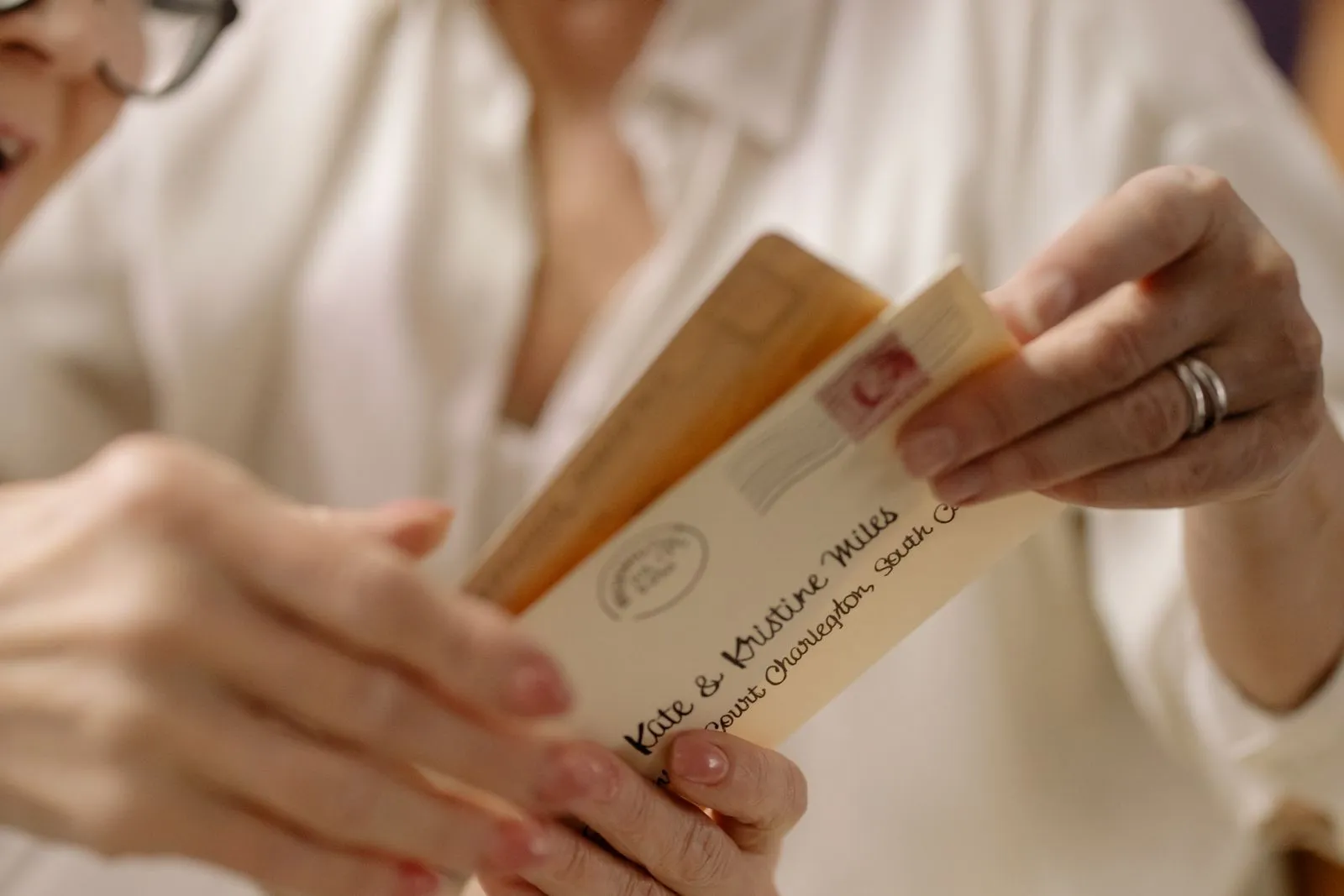
Addressing wedding invitations is easier when you decide on a consistent style before writing a single envelope. Start with your guest list, confirm each person’s preferred name and title, and consider whether your invitation suite uses an inner envelope. Formal wording can feel traditional without being rigid: accuracy and respect matter more than following one rule for every household. These guidelines will help you handle common situations clearly and avoid last-minute corrections.
Choose Your Formality Level
For a formal outer envelope, write guests’ full names and use appropriate titles, such as “Mr.,” “Ms.,” “Dr.,” or “The Honorable” when relevant. Spell out street names, states, and words such as “Apartment” if you want a traditional presentation. For a less formal wedding, first and last names without titles are also suitable. Choose one approach and use it consistently across the guest list.
An inner envelope, when included, clarifies exactly who is invited. The outer envelope carries the full mailing address and formal names; the inner envelope can use titles and surnames, first names, or the names of invited children. If you are not using inner envelopes, make the outer envelope and invitation wording clear enough that guests understand who is included.
Address Couples and Households
For a married couple with the same last name, a traditional format is “Mr. and Mrs. Jordan Lee.” Many couples prefer both first names instead: “Mr. Jordan Lee and Ms. Taylor Lee,” or simply “Jordan and Taylor Lee” for a relaxed style. For a married couple with different last names, list both names, joined by “and,” on separate lines if needed. When possible, use the same order the couple uses in everyday life.
For unmarried partners living together, address each person by name rather than treating one as an unnamed guest. Put the names on separate lines if space is limited. For a family, list the invited adults on the outer envelope; an inner envelope can name the children who are invited. If children are not included, avoid adding their names and clarify the invitation’s intended guests when appropriate.
Use Titles Thoughtfully
Use the title a guest actually uses, and confirm it when you are unsure. “Dr.” may apply to a physician or someone with a doctorate, while military, judicial, and diplomatic titles follow their own conventions. If a guest has a professional title, you can use it on the invitation without making the wording cumbersome. When both people in a couple hold titles, give each person their own title and name.
Some guests use a title other than “Mr.” or “Ms.,” or prefer no title at all. Follow the name and form of address they provide, and do not guess based on appearance or assumptions. If you are uncertain, ask discreetly or use the guest’s full name without a title. Respectful, accurate addressing is more important than forcing every name into a traditional template.
Check Details Before Mailing
Confirm spelling, titles, household relationships, and mailing addresses against a current guest list. Ask guests directly when a name has changed or a preferred form of address is unclear. Verify apartment or unit numbers and return addresses, then have someone else review the envelopes. A second check can catch small errors before invitations are mailed.
Common questions have practical answers: use “and” between two named guests to show that both are invited; use “and guest” only when you intend to offer an unnamed guest; and list children by name when they are included. If you are unsure whether a guest may bring someone, communicate that clearly rather than relying on envelope wording alone. Keep your chosen format consistent, while making exceptions where a guest’s preference calls for them.
A confident invitation begins with careful names, clear guest lists, and a consistent level of formality. When a situation does not fit a standard example, prioritize the guest’s preference and make the invitation’s meaning unmistakable. Review your list before addressing each envelope, and consider working with Grand Occasion Etiquette if you would like personalized guidance.